Your Dog Is Limping. What Usually Happens Next?
Updated March 22, 2026
When your dog starts limping, it gets your attention immediately. Whether it appeared suddenly after a run in the yard or crept in gradually over a few weeks, it is hard to watch your dog favor a leg and not want to do something about it right away.
The range of causes is wide, from a small thorn in a paw pad to a soft tissue sprain to a joint condition that has been developing quietly for months. Most limps in dogs are not emergencies, and many resolve with rest and a visit to the vet within a few days. Knowing what to look for and what typically happens next can help you make a calmer, better-informed decision about next steps.
This article walks through how vets assess a limping dog, what the most common causes are by age and leg location, what treatment usually looks like, and how to tell when something needs attention sooner rather than later.
In This Article
- Sudden vs. Gradual Limping: Why the Difference Matters
- What Vets Look For in a Limping Dog
- Common Causes by Age and Leg Location
- What Diagnosis Usually Involves
- Treatment Options and What to Expect
- Rest and Recovery at Home
- When to Act Quickly
- Limping That Keeps Coming Back
- Diagnosis and Treatment Costs
- Pet Insurance
Sudden vs. Gradual Limping: Why the Difference Matters
The first thing a vet will ask is whether the limp came on suddenly or developed slowly over days or weeks. This distinction shapes the entire diagnostic approach.
Sudden-onset Limping
Your dog was fine at breakfast, and limping by the afternoon typically points to an acute injury such as a sprain, a cut or foreign object in the paw, a muscle strain, or occasionally a fracture. These are often related to something that happened: a jump, a rough play session, a slip on a hard floor.
Gradual-Onset Limping
tends to suggest something structural or progressive, such as arthritis, elbow or hip dysplasia, a bone condition, or a soft tissue problem that has been building quietly. These often start with a subtle off-gait that owners notice before a true limp develops.
A Limp That Comes and Goes
The limp becomes present after rest, improves after a few minutes of movement, or worsens at the end of an active day, and is a common pattern in joint conditions like arthritis. Stiffness that loosens up is a familiar sign that most vets recognize immediately. It is worth noting this pattern to your vet if you have observed it.
What Vets Look For in a Limping Dog
A vet’s assessment of a limping dog is more systematic than it might appear from the exam room. They are building a picture from several observations, and each one narrows down the likely cause.
Gait Evaluation
Watching your dog walk on a non-slip surface helps the vet determine which leg is affected, how much weight the dog bears on it, and whether the compensation pattern suggests a specific area of the limb. Dogs tilt their heads up when landing on a painful front leg and drop their legs when pushing off a painful rear leg. This is a reliable and useful diagnostic clue.
Physical Palpation
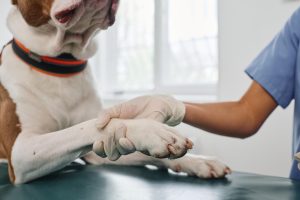
The vet will work methodically through the affected limb, pressing along the bones, flexing and extending each joint, and checking for swelling, heat, or pain at specific locations. Where a dog flinches or pulls away is often more informative than any other single finding. Palpation of the spine and hip region is typically included when rear limb lameness is the concern.
Range of Motion Assessment
Each joint is moved through its normal range to assess whether there is restriction, crepitus (a grinding or crackling sensation), or pain at certain angles. A reduced range of motion in a hip joint suggests dysplasia or arthritis. Pain on full extension of the elbow in a young large-breed dog often points toward elbow dysplasia.
Neurological Screening
If the limp has features suggesting nerve involvement, including weakness, stumbling, dragging a paw, or loss of coordination, the vet will include a brief neurological assessment. Spinal cord or nerve root problems can cause lameness that closely resembles a joint or limb injury and are worth ruling out early.
Common Causes by Age and Leg Location
Cause and location are strongly connected in limping dogs. Age also plays a significant role, as the conditions most likely to cause lameness in a young, growing dog differ from those in a middle-aged or senior dog.
Puppies and Young Dogs
Panosteitis is one of the most common causes of limping in young large-breed dogs, particularly between five and fourteen months. It causes intermittent lameness that can shift from one leg to the other without a clear history of injury. It is self-limiting, meaning it resolves on its own as the dog matures – and is managed with rest and pain control in the meantime.
Osteochondrosis dissecans (OCD) and elbow or hip dysplasia are developmental conditions that typically occur in large and giant breeds during growth. These may require imaging to diagnose and, depending on severity, may be managed medically or surgically.
Adult Dogs
Soft tissue injuries, such as sprains, strains, and cruciate ligament tears, are among the most common causes of lameness in active adult dogs. Cruciate ligament injury is particularly common and among the most frequently treated orthopedic conditions in dogs. It typically causes sudden rear limb lameness and almost always requires surgery for full recovery.
Lyme disease and other tick-borne infections can cause joint pain and lameness in adult dogs, particularly in regions where tick exposure is common. This is worth considering if your dog spends time in wooded or grassy areas and has not been on a consistent tick prevention regimen.
Senior Dogs
Osteoarthritis is the dominant cause of limping in older dogs, particularly in the hips, elbows, and stifles (knees). It is progressive but very manageable. Most dogs with well-controlled arthritis maintain a good quality of life for years with a combination of anti-inflammatory medication, weight management, appropriate exercise, and sometimes joint supplements or physical rehabilitation.
Bone tumors occur more frequently in large and giant breed older dogs and can cause lameness that does not respond to standard treatment. A limp in a senior large-breed dog that does not improve with rest and anti-inflammatories warrants X-rays to rule out a fracture. Catching it early expands the options available.
What Diagnosis Usually Involves
For many limping dogs, the vet exam alone provides a strong working diagnosis. A young Labrador limping on a rear leg after playing fetch, with pain on stifle examination, likely has a cruciate injury that X-rays will help confirm. A senior Golden Retriever stiff after rest with reduced hip range of motion is very often arthritic. X-rays are the most commonly used diagnostic tool for lameness. They show bone structure clearly and can identify fractures, joint space narrowing consistent with arthritis, developmental abnormalities, or bone changes that suggest more serious conditions. Most practices can take and review X-rays the same day.
For soft-tissue injuries such as cruciate ligament tears, tendon damage, or muscle injuries, X-rays show normal bones but do not directly image the soft tissue. Advanced imaging, like MRI or CT Scan, is more precise but typically requires referral to a specialty practice or veterinary school. Many orthopedic diagnoses are confirmed by a board-certified veterinary surgeon at that stage.
Bloodwork may be recommended if an infectious cause is suspected or if your dog is older and requires a pre-surgical evaluation. Joint fluid analysis is sometimes used when infection or immune-mediated joint disease is being considered.
Treatment Options and What to Expect
Treatment depends on the diagnosis, the severity of the lameness, and your dog’s age and overall health. Most cases fall into one of three management categories.
Rest and Medical Management
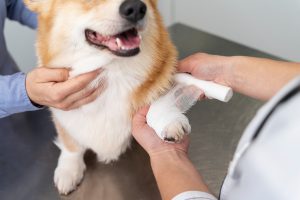
Minor sprains, strains, panosteitis, and mild arthritis flare-ups typically respond well to a period of strict rest combined with anti-inflammatory pain medication. Strict rest means leash walks only; no running, jumping, or stairs for a defined period, usually one to four weeks. Most dogs improve noticeably within that window if they actually rest.
Non-steroidal anti-inflammatory drugs (NSAIDs) prescribed by your vet are safe and effective for most dogs when used as directed. Over-the-counter pain medications intended for humans, including ibuprofen, acetaminophen, and aspirin, should not be given to dogs without explicit veterinary guidance, as they carry real risks at doses used for people.
Ongoing Management for Chronic Conditions
Arthritis and other progressive joint conditions are managed long-term with a combination of tools: prescription NSAIDs, joint supplements, weight management, controlled exercise, and sometimes physical rehabilitation. Newer injectable medications like Librela (monoclonal antibody therapy for canine osteoarthritis pain) are now available and offer an alternative for dogs who do not tolerate oral NSAIDs well.
The goal of arthritis management is to keep your dog comfortable and mobile. Most dogs do very well with consistent management, and the plan is adjusted over time as the condition evolves.
Surgical Treatment
Cruciate ligament tears, significant joint dysplasia, OCD lesions, and fractures typically require surgery for the best outcome. For cruciate repairs specifically, several surgical techniques are available, including TPLO (tibial plateau leveling osteotomy) and TTA (tibial tuberosity advancement), which are the most widely used. Recovery takes several months and usually includes physical rehabilitation.
Surgery for orthopedic conditions is routine and performed regularly at general practices and veterinary specialty hospitals. Outcomes are generally good, and most dogs return to full or near-full activity after a complete recovery period.
Rest and Recovery at Home
Rest is the most underestimated part of recovery for limping dogs. Many owners restrict activity for a few days, see improvement, and then let the dog return to normal too soon, only to watch the limp return. The tissue that needs to heal does not care that your dog seems better.
For a prescribed rest period to work, there needs to be real rest: leash walks only; no off-leash time; no stairs, if possible; no jumping on or off furniture. Dogs do not self-regulate well when they are feeling better – that is the owner’s job during recovery.
If your dog is crated during recovery, short leash walks every few hours are better than long ones. Mental enrichment, such as food puzzles, training games, and chew toys, helps keep a restless dog calm when physical activity isn’t possible. Most dogs adjust to rest restrictions better than their owners expect.
When to Act Quickly
Most limps do not require an emergency visit, but here is how to tell when you need to seek faster care.
Call Your Vet That Day If Your Dog:
- Is bearing no weight on the leg at all and has not improved with several hours of rest
- Has visible swelling, a wound, or something embedded in the paw
- Is limping on a leg that was recently injured and seems to be getting worse, not better
- Has a limp that appeared suddenly in a senior large-breed dog with no clear injury history
- Shows signs of pain – whimpering, guarding the limb, or reacting when touched near it
Go To An Emergency Vet Immediately If Your Dog:
- Has a limb that appears to be at an abnormal angle or is visibly deformed
- Was hit by a car or had a significant fall and is now limping
- Is in obvious distress – crying out persistently, unable to get up, or collapsed
A dog that is completely non-weight-bearing and distressed is having a more serious problem than a dog that is limping but moving around. The degree of weight bearing and your dog’s overall demeanor are your best guides to urgency.
Limping That Keeps Coming Back
Intermittent or recurring limping, a limp that appears, improves, and then comes back without a clear new injury, usually points to an underlying condition rather than repeated acute injuries. This pattern warrants a more thorough diagnostic workup if one has not already been performed.
Common culprits for recurring limping include early-stage arthritis, an incompletely healed soft tissue injury, elbow or hip dysplasia that has not been formally diagnosed, or a chronic joint condition that flares with activity. In some cases, a previous injury altered the joint’s mechanics enough to make it more vulnerable to future strain.
If your dog has limped more than once in the same leg without a clear reinjury, ask your vet about imaging if it hasn’t been done. X-rays taken when the dog is sound can sometimes miss early changes; imaging during or shortly after a flare may show more. A referral to a veterinary orthopedic specialist is reasonable if the pattern continues without a clear diagnosis.
Diagnosis and Treatment Costs
Costs for a limping dog depend heavily on the cause and the diagnostic path. A straightforward soft tissue sprain diagnosed on exam and managed with rest and NSAIDs might cost $150 to $350 for the visit and medication. A cruciate repair, by contrast, typically ranges from $3,500 to $6,500 depending on the technique, the dog’s size, and where the surgery is performed.
X-rays add $200 to $400 to most visits. Advanced imaging, such as MRI or CT, typically requires a specialty referral and ranges from $1,500 to $3,000. Ongoing arthritis management includes medications, supplements, and routine monitoring visits, and generally costs $500 to $1,200 per year once a stable plan is in place.
The first visit, when imaging and an exam are combined, tends to be the highest-cost step. After that, management costs become more predictable. Asking your vet for an itemized estimate at each stage helps you plan without surprises.
How Can Pet Insurance Help You if Your Dog Needs Treatment?
Pet insurance can be a valuable tool in managing the costs of treating a dog’s veterinary expenses. By having a pet insurance policy in place, you can have peace of mind knowing that you can provide medical care for your furry companion without worrying about the financial burden. Pet insurance can help cover the costs of veterinary consultations, diagnostic tests, medications, and even specialized treatments if required.
Reimbursement
This method is the most common for pet insurance companies. You pay out of pocket for the veterinarian bill, and then the insurance company reimburses you for what’s covered under the insurance plan. The steps look like this.
- You pay the vet bill after your dog’s visit.
- You fill out the pet insurance claim form.
- Submit the claim form and other required documentation to the insurer.
- After the claim is approved, you will be reimbursed for eligible expenses.
What Does Odie Pet Insurance Cover?
Pet insurance covers various veterinary expenses, providing financial protection and peace of mind for pet owners. Here are the details of the coverage options offered by Odie Pet Insurance:
Illness & Injury Plan
The Illness & Injury Plan is an all-inclusive insurance plan designed to cover a wide range of medical needs for your pet. This plan includes comprehensive coverage for various illnesses, injuries, and veterinary services. Some of the covered items include:
- Veterinary exams and consultations
- Diagnostics (e.g., X-rays, lab tests)
- Prescribed medications
- Surgeries and hospitalization
- Rehabilitation, acupuncture, or chiropractic treatments
- Medically necessary supplies
The Wellness Plan
The Wellness Plan is a monthly membership that focuses on preventive care and covers routine veterinary services.
- Provides reimbursements for routine care items such as wellness visits (exams and vaccines), testing and parasite prevention, dental cleanings and at-home dental care, vitamins, supplements, and more.
- Through Odie’s partnership with Petivity, a leader in smart pet products and proactive care, Wellness Plan members can also receive reimbursements for Petivity devices and health kits, as well as eligible Purina food and supplements.
- Total reimbursement up to $700 per year.