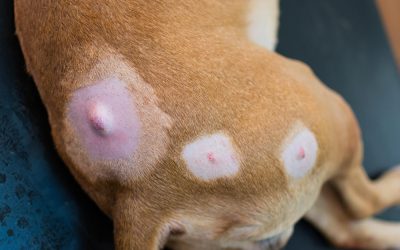
Pet First Aid Month: Be Ready When It Matters
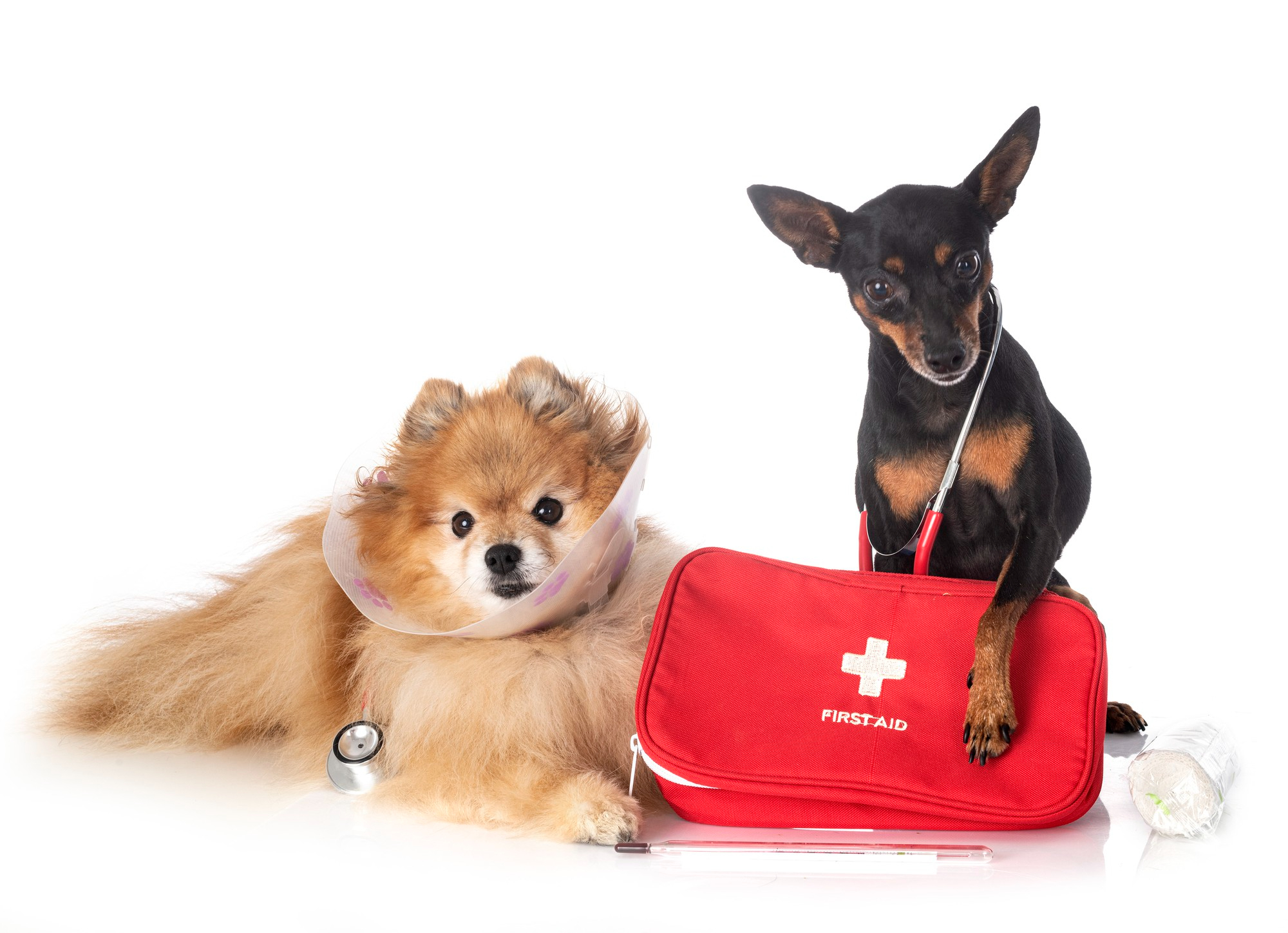
April is National Pet First Aid Awareness Month, created around the straightforward idea that most pet owners want to help when something goes wrong, but many have never been shown how to do so. Basic first aid knowledge does not replace veterinary care, but it bridges the gap between the moment something happens and the moment your pet is in professional hands.
Most situations that call for pet first aid are not life-threatening on their own. A cut paw, a bee sting, mild vomiting, or a minor burn are the kinds of events that come up in the life of most pets at some point. Knowing how to assess the situation calmly, provide appropriate support, and make a clear-headed decision about whether to call the vet or go immediately is the practical skill this month is designed to build.
This guide covers the essentials of what belongs in a pet first aid kit, how to handle the most common situations, how to recognize when something needs more than home care, and how to stay prepared year-round so that readiness is the default rather than the exception.
In This Article
- Why Pet First Aid Awareness Month Matters
- Know Your Pet’s Normal Vitals
- What to Put in a Pet First Aid Kit
- Handling Common First Aid Situations
- When to Call Your Vet and When to Go Now
- How to Move an Injured Pet Safely
- Pet First Aid for Cats vs. Dogs
- Building a Year-Round Readiness Habit
- First Aid Resources Worth Bookmarking
Why Pet First Aid Awareness Month Matters
The American Red Cross offers pet first aid courses, and the American Veterinary Medical Association publishes detailed guidance on handling pet emergencies. Despite this, surveys consistently show that the majority of pet owners have never taken a pet first-aid class and do not keep a dedicated pet first-aid kit at home. The knowledge gap is not about willingness; most pet owners care deeply about their animals. It is about the information never being presented in an accessible, practical way.
Pet First Aid Awareness Month, observed every April, exists to close that gap. The goal is not to turn every pet owner into a veterinary technician. The goal is to give pet owners enough knowledge to stay calm, make good decisions, and provide useful support in the minutes before professional help is available. That window of time matters, and what you do in it matters too.
The most useful thing about first aid knowledge is that it reduces panic. When you know what a normal gum color looks like, you can recognize an abnormal one. When you know how to apply gentle pressure to a bleeding wound, you are not standing frozen while the situation escalates. Preparedness is a practical skill, and it is one of the most accessible things a pet owner can build.
Know Your Pet’s Normal Vitals
One of the most practical things you can do before any emergency occurs is to learn your pet’s normal baseline measurements. When something seems off, having a reference point helps you gauge how far from normal the situation actually is and communicate clearly with your vet over the phone.
Heart Rate
The resting heart rate for adult dogs ranges from 60 to 140 beats per minute, depending on size — smaller dogs tend toward the higher end of that range and larger dogs toward the lower. The resting heart rate for cats is typically between 140 and 220 beats per minute. To check your pet’s heart rate, place two fingers on the inside of the upper hind leg where the femoral artery runs close to the surface, and count beats for 15 seconds, then multiply by four.
Breathing Rate
A healthy resting breathing rate for both dogs and cats is between 15 and 30 breaths per minute. You can count this by observing the rise and fall of your pet’s chest while it rests quietly. Breathing rates above 40 breaths per minute at rest, or any breathing that appears labored, rapid, or effortful, is worth reporting to your vet.
Body Temperature
The normal body temperature for dogs and cats is between 100 and 102.5 degrees Fahrenheit. A temperature above 104 degrees or below 99 degrees warrants a call to your veterinarian. A rectal thermometer gives the most accurate reading. Ear thermometers designed for pets are less accurate but more practical for quick checks. Lubricate the thermometer tip before use and hold it in place for the time specified by the manufacturer.
Gum Color
The gums of a healthy dog or cat should be pink and moist, and when you press a finger against them and release, the pink color should return within one to two seconds. This is called capillary refill time. Pale, white, blue, gray, or bright red gums, or a refill time longer than two seconds, indicate that circulation may be compromised and that the pet needs veterinary attention promptly.
What to Put in a Pet First Aid Kit
A basic pet first aid kit does not require a special purchase. Many of the supplies overlap with a standard human first aid kit, and the rest are inexpensive and available at any pharmacy or pet supply store. The goal is to have what you need within reach before you need it.
Wound Care and Bandaging
- Sterile gauze pads in several sizes
- Self-adhesive bandage wrap, such as VetWrap
- Medical tape
- Blunt-tipped scissors for cutting bandage material
- Tweezers for removing splinters or visible debris from wounds
- Saline solution or clean water for rinsing wounds
- Antiseptic wipes or diluted chlorhexidine solution for cleaning around wounds
Monitoring and Assessment
- Digital rectal thermometer
- Petroleum jelly for thermometer lubrication
- A penlight or small flashlight for examining eyes, ears, and the mouth
- Disposable gloves to protect both you and your pet
Restraint and Transport
- A spare leash or nylon slip lead
- A muzzle in your pet’s size, even the gentlest dog, may bite when in pain
- A towel or blanket that can double as a stretcher for small dogs and cats
- A sturdy carrier or crate for cats and small dogs
Reference Materials and Contacts
- A printed copy of your pet’s vaccination records and any current medications
- Your primary veterinarian’s phone number
- The address and phone number of the nearest 24-hour emergency veterinary clinic
- ASPCA Animal Poison Control Center: (888) 426-4435
- Pet Poison Helpline: (855) 764-7661
Store your kit in a location that every adult in the household knows and can access quickly. A waterproof container with a clear lid works well. Keep a smaller version in your car if you travel with your pet regularly.
Handling Common First Aid Situations
The situations below are among the most common reasons pet owners seek first aid guidance. Each one is manageable at home with appropriate care and calm observation, though knowing when to escalate to veterinary attention is part of handling them well.
Cuts and Lacerations
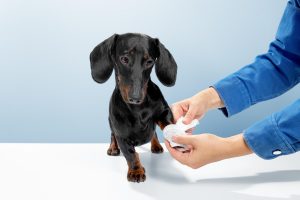
For minor cuts, the first step is to apply gentle, direct pressure with a clean gauze pad and hold it in place for several minutes without lifting to check the area. This allows a clot to begin forming. Once bleeding slows, rinse the wound gently with saline solution or clean water to remove debris. Avoid applying hydrogen peroxide directly to the wound, as it can damage tissue and slow healing. A shallow cut that continues bleeding after 10 minutes of pressure, or any cut that is deep, gaping, or located near the eye or a joint, should be evaluated by a veterinarian.
Bee Stings and Insect Bites
If you can see a bee stinger, scrape it away with a credit card or flat edge rather than pulling with fingers or tweezers, which can squeeze more venom into the skin. A cool compress applied to the area can reduce swelling and provide some relief. Most bee stings produce localized swelling and minor discomfort that resolves within a few hours. A pet that develops facial swelling, hives, vomiting, difficulty breathing, or collapse after a sting is showing signs of an allergic reaction that needs veterinary attention right away.
Vomiting
A single vomiting episode followed by normal behavior and interest in food is generally not a cause for concern. Withholding food for two to four hours after vomiting and then offering a small amount of bland food, plain boiled chicken, and rice, for example, is a reasonable first step. Vomiting that repeats three or more times in a day, is accompanied by blood or unusual material, or occurs alongside lethargy, abdominal bloating, or pain, is worth a call to your veterinarian.
Minor Burns
For minor thermal burns from a brief contact with a hot surface, run cool water over the affected area for 10 to 15 minutes. Do not apply ice, butter, or toothpaste, all of which can cause additional tissue damage or introduce bacteria. Cover the area loosely with clean gauze and contact your veterinarian. Burns are often more extensive than they appear on the surface, and professional assessment helps determine whether further treatment is needed.
Eye Irritation
If your pet has something in their eye, debris, a grass seed, or a foreign object, rinse the eye gently with saline solution using a dropper or clean syringe without a needle. Hold the eye open gently and flush from the inner corner outward. Do not attempt to remove an object that is embedded in the eye or stuck to the surface. Any pet that continues to paw at the eye, keeps it closed, shows cloudiness or discharge, or shows sensitivity to light after rinsing should be seen by a veterinarian.
When to Call Your Vet and When to Go Now
Most cases are manageable at home or with a scheduled veterinary visit, but some situations call for faster action. The guidance below is designed to help you calibrate your response without second-guessing.
Call Your Vet Soon If:
- Your pet vomited or had diarrhea more than twice in a single day
- There is a minor cut that is not closing or is showing signs of infection, redness, warmth, swelling, or discharge
- Your pet is limping but bearing some weight and is not in obvious severe pain
- Your pet ate a small amount of something that may be mildly toxic, such as a single grape or a lick of chocolate
- Your pet has a swollen area on the body that appeared suddenly, but your pet is otherwise behaving normally
- Your pet has not eaten for more than 24 hours without an obvious explanation
Go to the Emergency Vet Now If:
- Your pet is having a seizure or has had one in the last hour
- Your pet is struggling to breathe, breathing with their mouth open continuously, or making unusual sounds while breathing
- Your pet is unresponsive or collapses and does not recover quickly
- There is uncontrolled bleeding that does not slow after 10 minutes of firm pressure
- Your pet ingested a known toxin in significant quantity, such as antifreeze, rodenticide, xylitol, grapes or raisins, or medications not intended for pets
- The abdomen appears distended or hard, particularly in large and deep-chested dogs, which can indicate bloat
- Gums are pale, white, blue, or gray rather than the normal pink color
When you are unsure, calling your veterinarian’s office is always the right first step. Most clinics can help you assess the situation over the phone and advise whether the pet needs to be seen immediately, can wait for a regular appointment, or can be monitored at home.
How to Move an Injured Pet Safely
Moving an injured animal incorrectly can worsen an injury, particularly if there is any possibility of a spinal issue. Understanding the basics of safe transport helps you act confidently without causing additional harm.
Small Dogs and Cats
For a small dog or cat, a firm carrier or a towel used as a sling provides good support during transport. Gently place the animal on the towel or blanket, supporting the head and body together rather than picking it up by the limbs or scruff. If a spinal injury is possible following a fall or a car accident, minimize bending and twisting of the spine by keeping the animal as flat as possible during transfer.
Medium and Large Dogs
For larger dogs, two people make the process safer and more comfortable for the animal. One person supports the chest and front legs while the other supports the hindquarters. A flat board, a firm blanket, or a large folded towel can serve as a stretcher for dogs who cannot bear weight on one or more limbs. Avoid allowing a large injured dog to jump in or out of a vehicle. Lift them in and out with support under both the front and rear of the body.
Muzzling an Injured Animal
An animal in pain may bite even if it has never shown aggression before. Applying a muzzle before attempting to move or examine an injured animal is a reasonable precaution, not a reflection of the animal’s normal temperament. A strip of soft material, a necktie, a folded bandage, or a soft belt can function as a temporary muzzle in an emergency. Loop it around the muzzle twice, tie it on top of the nose, and then bring the ends back behind the ears to tie in a bow. Do not muzzle an animal who is vomiting or having difficulty breathing.
Pet First Aid for Cats vs. Dogs
Many first aid principles apply equally to dogs and cats, but there are meaningful differences in how each species responds to handling, stress, and certain treatments. Understanding those differences helps you apply first aid more effectively and safely.
Cats Are More Prone to Hiding Illness
Cats are instinctively inclined to conceal signs of pain or illness, a behavior rooted in prey animal self-preservation. A cat sitting quietly in a corner may be significantly more uncomfortable than their behavior suggests. Subtle changes in behavior, such as reduced grooming, reluctance to jump, altered eating patterns, or increased time spent hidden, are often the first indicators that something is wrong. When assessing a cat in a first-aid context, a calm, gentle approach with minimal restraint reduces stress and improves accuracy.
Medication Differences
Several medications that are safe and commonly used in dogs are toxic to cats. Acetaminophen — found in Tylenol and many over-the-counter pain relievers is highly toxic to cats and should never be given. Aspirin is also unsafe for cats in the doses used for dogs. Ibuprofen is harmful to both species. Do not administer any human pain medication to a pet without specific guidance from a veterinarian who knows the species and the condition being treated.
Handling Differences Under Stress
Dogs in pain often accept handling more readily than cats, though both may bite. Cats under significant stress can become very difficult to examine and may injure themselves further if forcibly restrained. A towel wrap, sometimes called a cat burrito, restrains gently and reduces visual stimulation, which helps most cats tolerate a brief examination or treatment. Move slowly, speak quietly, and limit the number of people present when handling a stressed cat.
Building a Year-Round Readiness Habit
Pet First Aid Awareness Month is a useful annual prompt, but readiness is not something you build once in April and then set aside. A few small maintenance habits keep your knowledge and your kit current throughout the year.
Check the Kit Every Six Months
Supplies expire, get used up, and need to be replaced. Setting a calendar reminder twice a year — one in April during Pet First Aid Month and one in October to check expiration dates and restock missing items takes about 10 minutes and ensures the kit is ready when you actually need it. Pay particular attention to saline solutions, antiseptic wipes, and any medications you keep in the kit.
Update Your Emergency Contacts
If you have moved, changed vets, or are traveling to a new area, confirm that your emergency contacts are current. The location of the nearest 24-hour veterinary emergency clinic in an unfamiliar city is worth looking up before you need it, rather than during a stressful moment. Saving it in your phone contacts before a road trip or vacation takes about two minutes.
Take a Pet First Aid Course
The American Red Cross offers in-person and online pet first aid courses that cover the fundamentals in a few hours. The hands-on component, practicing how to bandage a wound, perform a pet heimlich maneuver, or position an animal for transport, builds muscle memory that a written guide alone cannot replicate. Many veterinary clinics and animal shelters also offer free or low-cost pet first aid workshops throughout the year.
First Aid Resources Worth Bookmarking
The following resources provide reliable, veterinarian-reviewed guidance that you can return to anytime. Saving these now means you will have them available in the moment rather than searching during a stressful situation.
- American Red Cross: Pet First Aid App and Courses: redcross.org/pet-emergency-preparedness
- AVMA: Emergency Care for Pets: avma.org/resources-tools/pet-owners/emergencycare
- ASPCA Animal Poison Control Center – (888) 426-4435: aspca.org/pet-care/animal-poison-control
- VCA Hospitals: Pet First Aid Guides: vcahospitals.com/know-your-pet/emergency-care-for-pets
The Bottom Line
Pet First Aid Awareness Month is a good reason to do something most pet owners intend to get to someday. Assembling a basic kit, saving the right phone numbers, and spending a few minutes learning about the most common first aid situations are all things that take less time than they seem and provide real value when needed.
The goal of pet first aid is not to replace veterinary care it is to bridge the gap between the moment something happens and the moment your pet is in professional hands. A calm, prepared owner who knows how to apply pressure to a wound, assess gum color, and make a clear-headed decision about the next step is doing something meaningful for their animal’s welfare.
Readiness is a habit rather than a single event. A kit that gets checked twice a year, saved contacts that are current, and a basic understanding of what to watch for will serve you and your pet well through every season.